Wednesday, 3 August 2016
from The Zen Space 2016
Work recently published in The Zen Space 2016 Summer Edition
white cyclamen
her nightdress wafts
last light
settling in the wake
of their feet
a pair of swans
morning frost
born on a puff of mist
the robin’s note
secluded pond
a feral cat drinks in
silence
such frailty
wild crocuses we lean
into prevailing winds
across ice flowers
first thing
the skitter of wrens
cliff top walk
a snail bleached white
fills with rain
Easter Low Tide
Easter low tide
broke back hulls
expose permanence
Anemones
internalise
we take time to muse
a ship’s finality
demised in flint
ribbed reefs
stuck deep
our circled tracks
ephemeral
await each wave’s
elimination

Tuesday, 1 September 2015
.
.
Patricia Prime's review in KOKAKO 23 September 2015
Dark Seeds Fallen by John Parsons
Labyrinth Press, (2015) Pb. 72 pp, ISBN 978 1 872468 846. For purchases,
please email the author for details of purchase at jparsons100@googlemail.com
reviewed by Patricia Prime
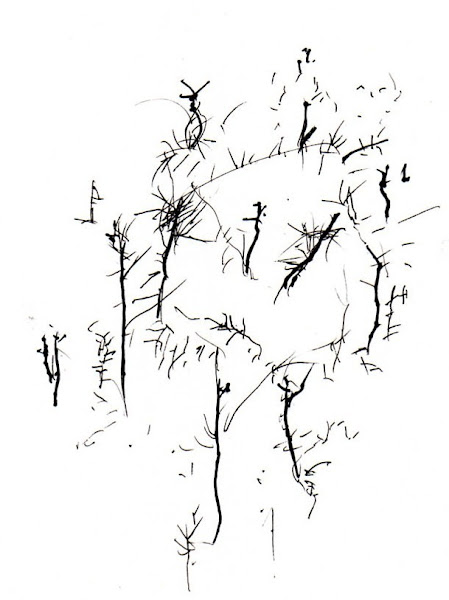
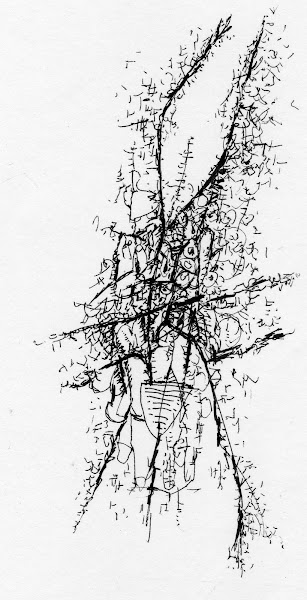
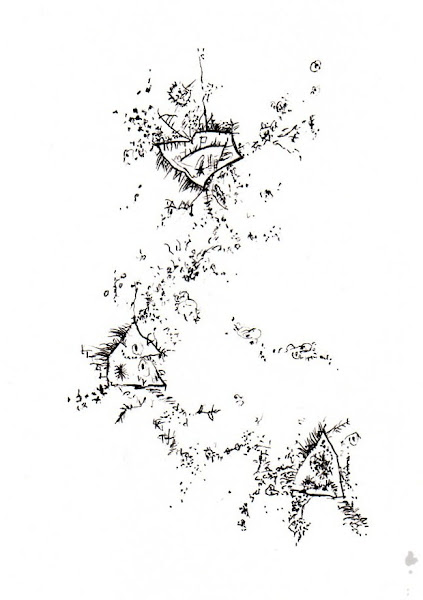
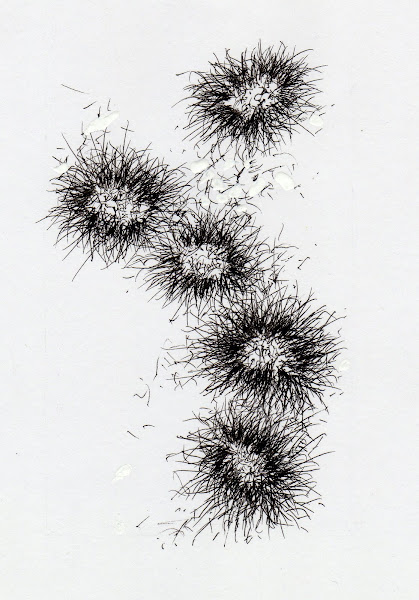
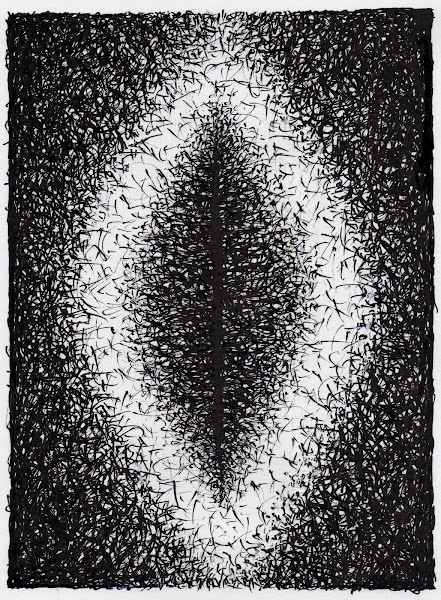
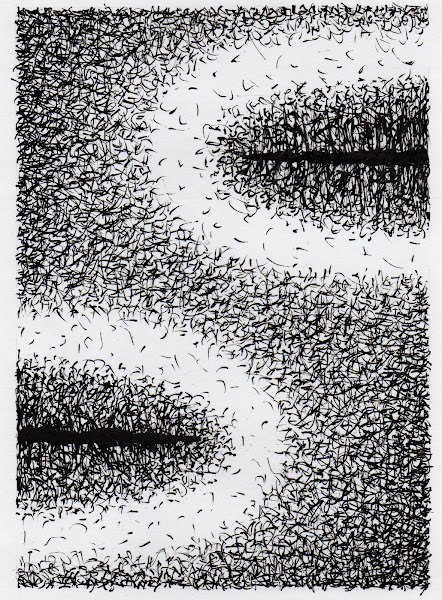
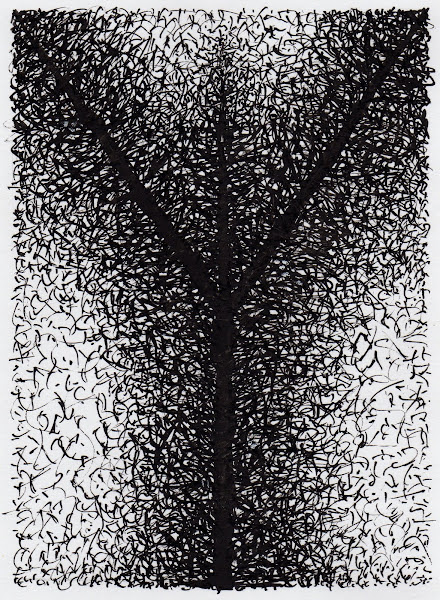
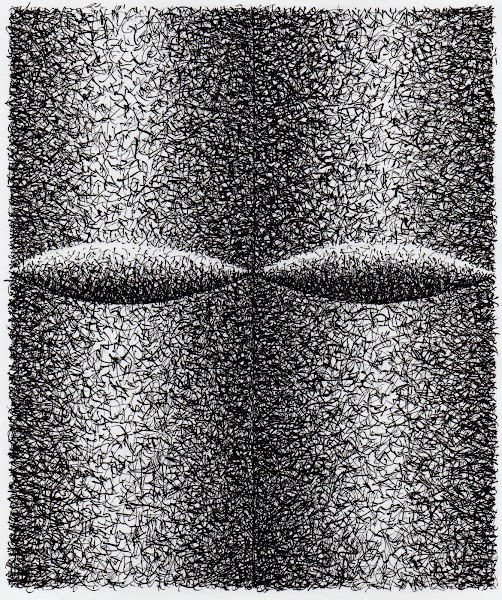
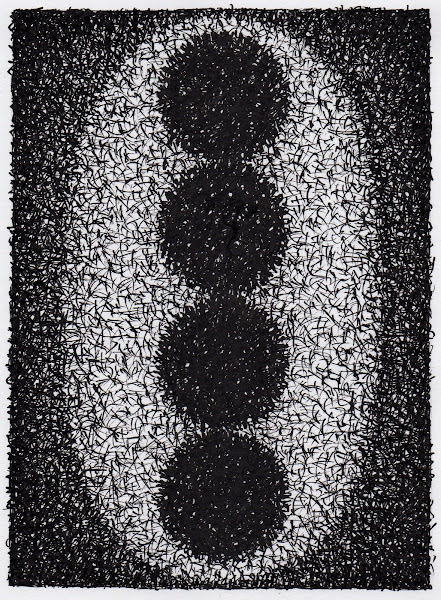
John Parsons is an artist and writer living in Norfolk, UK. Dark Seeds Fallen is his sixth book of haiku. This selection of haiku is illustrated with the author’s black and white drawings.
The most obvious characteristic of John Parson’s haiku is its sensuous nature, as we see in the title poem, which begins the collection.
dark seeds fallen
honesty becomes
more transparent
Nature, beauty, sight and sensation are evoked with a compelling immediacy. This gives the haiku an intoxicating quality. Where it is leading, in the first instance is to more haiku with the same qualities, bringing in other senses and sensations: touch, smell, sound and emotions. Relationships, with other people and loved ones are also present.
white sun through mist
she catches my smile
and returns it
From here to the book’s final haiku:
sickle moon
through ranks of sweet corn
slides a fox’s brush
All our senses are cajoled, pampered and stimulated as we follow the poet on a journey through the seasons and countryside of his Norfolk home. Indeed, this last haiku is a measure of how far the poet can take us.
The core of the book is a series of haiku dealing with nature and the seasons, although ‘dealing with’ is an inadequate phrase with which to describe the way these topics meld with both the wider world and the poet’s masterful command of language.
The following haiku is a good example, bringing words such as ‘horned’, ‘naked’ and ‘quicksilver’ together and, at the same time, moving out from the simple subject to the universal:
horned moon
the naked pollard shivers
a pool of quicksilver
Similarly, in an otherwise very different haiku:
snorting saliva
the great red bull eyes me
with indifference
Words like ‘snorting’, ‘great red bull’ and ‘indifference’, present us with the scary truth of the angry beast.
The following haiku:
old war defences
a snake skin sloughed
across barbed wire
presents us with thoughts of life and death (all too familiar from war footage on TV). Here it is only a snake’s skin caught on barbed wire, but an image which the haiku might bring to mind is that of a battlefield.
The collection ranges widely, from birds, butterflies and flowers to the poet’s personal life and emotions, as in the following haiku with its intimate scene:
I zip her up
brush her down
she offers a cheek
No matter the setting: garden, bus queue, beach, river, workshop or sea, Parsons’ descriptive touch is sure, his landscapes are even better when peopled by characters he delineates with warmth, humour and empathy. The old ladies, the old salt, a lone walker, his mother, a wedding party are minimally but powerfully sketched as we see in the following haiku:
outside the pub
small boy talks to himself
on walkie talkies
This is a collection to savour, not just for its delights but for its insights into the richness that lies beneath the surface of our lives. It is one of the most significant things about haiku that it focuses on the ‘moment’; the greatest haiku achieve this seamlessly and simultaneously. Haiku that do so effectively are rare enough, and to read one of ‘Parsons’ collections that achieves this so effortlessly is a privilege,
.
Patricia Prime's review in KOKAKO 23 September 2015
Dark Seeds Fallen by John Parsons
Labyrinth Press, (2015) Pb. 72 pp, ISBN 978 1 872468 846. For purchases,
please email the author for details of purchase at jparsons100@googlemail.com
reviewed by Patricia Prime
John Parsons is an artist and writer living in Norfolk, UK. Dark Seeds Fallen is his sixth book of haiku. This selection of haiku is illustrated with the author’s black and white drawings.
The most obvious characteristic of John Parson’s haiku is its sensuous nature, as we see in the title poem, which begins the collection.
dark seeds fallen
honesty becomes
more transparent
Nature, beauty, sight and sensation are evoked with a compelling immediacy. This gives the haiku an intoxicating quality. Where it is leading, in the first instance is to more haiku with the same qualities, bringing in other senses and sensations: touch, smell, sound and emotions. Relationships, with other people and loved ones are also present.
white sun through mist
she catches my smile
and returns it
From here to the book’s final haiku:
sickle moon
through ranks of sweet corn
slides a fox’s brush
All our senses are cajoled, pampered and stimulated as we follow the poet on a journey through the seasons and countryside of his Norfolk home. Indeed, this last haiku is a measure of how far the poet can take us.
The core of the book is a series of haiku dealing with nature and the seasons, although ‘dealing with’ is an inadequate phrase with which to describe the way these topics meld with both the wider world and the poet’s masterful command of language.
The following haiku is a good example, bringing words such as ‘horned’, ‘naked’ and ‘quicksilver’ together and, at the same time, moving out from the simple subject to the universal:
horned moon
the naked pollard shivers
a pool of quicksilver
Similarly, in an otherwise very different haiku:
snorting saliva
the great red bull eyes me
with indifference
Words like ‘snorting’, ‘great red bull’ and ‘indifference’, present us with the scary truth of the angry beast.
The following haiku:
old war defences
a snake skin sloughed
across barbed wire
presents us with thoughts of life and death (all too familiar from war footage on TV). Here it is only a snake’s skin caught on barbed wire, but an image which the haiku might bring to mind is that of a battlefield.
The collection ranges widely, from birds, butterflies and flowers to the poet’s personal life and emotions, as in the following haiku with its intimate scene:
I zip her up
brush her down
she offers a cheek
No matter the setting: garden, bus queue, beach, river, workshop or sea, Parsons’ descriptive touch is sure, his landscapes are even better when peopled by characters he delineates with warmth, humour and empathy. The old ladies, the old salt, a lone walker, his mother, a wedding party are minimally but powerfully sketched as we see in the following haiku:
outside the pub
small boy talks to himself
on walkie talkies
This is a collection to savour, not just for its delights but for its insights into the richness that lies beneath the surface of our lives. It is one of the most significant things about haiku that it focuses on the ‘moment’; the greatest haiku achieve this seamlessly and simultaneously. Haiku that do so effectively are rare enough, and to read one of ‘Parsons’ collections that achieves this so effortlessly is a privilege,
Monday, 30 March 2015

Saturday, 21 February 2015


Friday, 25 July 2014
Tuesday, 27 May 2014
*
RECENT AWARDS.................
TOUCHSTONE AWARD for
silence of snow
we listen to the house
grow smaller
This haiku also gained best of issue in FROGPOND 2013 and Museum of Literature Award.
**
SECOND PRIZE, 'AN (COTTAGE) PRIZE' in the annual GENJUAN HAIBUN COMPETITION
for 'UNCLE WALTER'
North Norfolk could only be reached by a single track train; its
inaccessibility protected the folk lore and traditions. Uncle Walter, with his
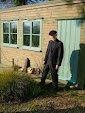
rich musical accent, is the epitome of all this, from his battered trilby to
his gaiters. On his back door are a mandolin and a twisted hazel. His table is
littered with hedging tools and gin traps, even an old bird’s nest. On the wall,
foxed prints include the Death of Nelson. A stuffed cat sits on the mantel, a squirrel
gun leans in the corner; all magic to my eyes.
RECENT AWARDS.................
TOUCHSTONE AWARD for
silence of snow
we listen to the house
grow smaller
This haiku also gained best of issue in FROGPOND 2013 and Museum of Literature Award.
**
SECOND PRIZE, 'AN (COTTAGE) PRIZE' in the annual GENJUAN HAIBUN COMPETITION
for 'UNCLE WALTER'
Uncle Walter
Just after the war, I am sent
to Aunt Cath’s in Burnham Thorpe, Nelson’s birthplace. It nestles between the
Holkham estate and the great empty expanse of salt marsh that lines the coast;
a world of mystery and magic. Steam engines rumble across fields, ‘night soil’
men visit in the dark. The only light is oil, ghost stories of black dogs and
headless horsemen abound.
“Uncle Walter’s a dirty old
chap” says my aunt Cath, “he washes his face in that old water butt where we drowned
the kittens”.
by the flint cottage
into green depths
spiral
nymphs
from his pocket
a coiled ferret
unsprung
Uncle has a black pony called
Bess that pulls a trap. I help him collect hay from the verges, using a sickle.
On our return I perch on top, soak up its smell; listen to the rhythm of
hooves, to him talking with Bess in that sing song voice. He has a special way
with her; she seems to read his mind. I ask him if it’s true.
down Old Lowses
at a pace through
wreaths
of roll-up smoke
He tells me of Suffolk
“A toad’s bone?” I repeat.
“Yes boy, a sort of wishbone.
You catch a toad and hangs it in a thorn till its all dried up, then you buries
it in the ant’s fortress. On the full moon you throws it in the beck. If the
hip bone swims upstream, you catch it and keeps it under your arm. Its this
bone my boy, that gives you the power.
We arrive home and unload the
hay, Bess, out of her harness, stands in the yard; he smiles and murmurs something
to her. She nods and walks quietly into the stable.
whispers from childhood
still close
in the darkness

Subscribe to:
Posts (Atom)